Middle East Conflict - Impact on Global Freight Networks
Ongoing instability in the Middle East continues to disrupt global ocean and air freight networks. The key pressure points remain the Strait of Hormuz, Red Sea routing, and restricted Middle East airspace.
Carriers and airlines have now shifted from short-term reaction to sustained network adjustments. This is driving cost increases, longer transit times, and reduced schedule reliability at a global scale.
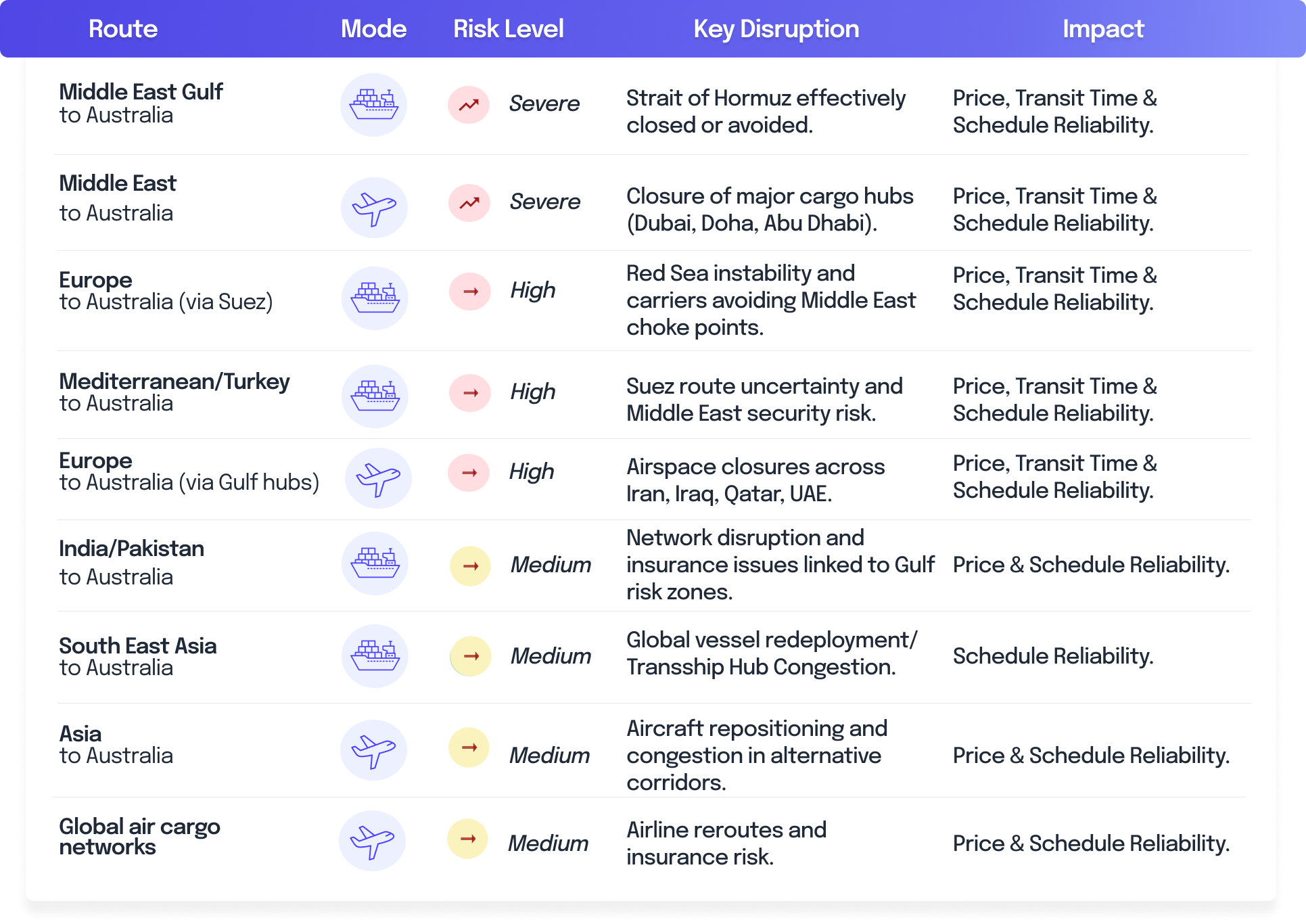
Current Freight Network Risk Overview
Ocean Freight Update
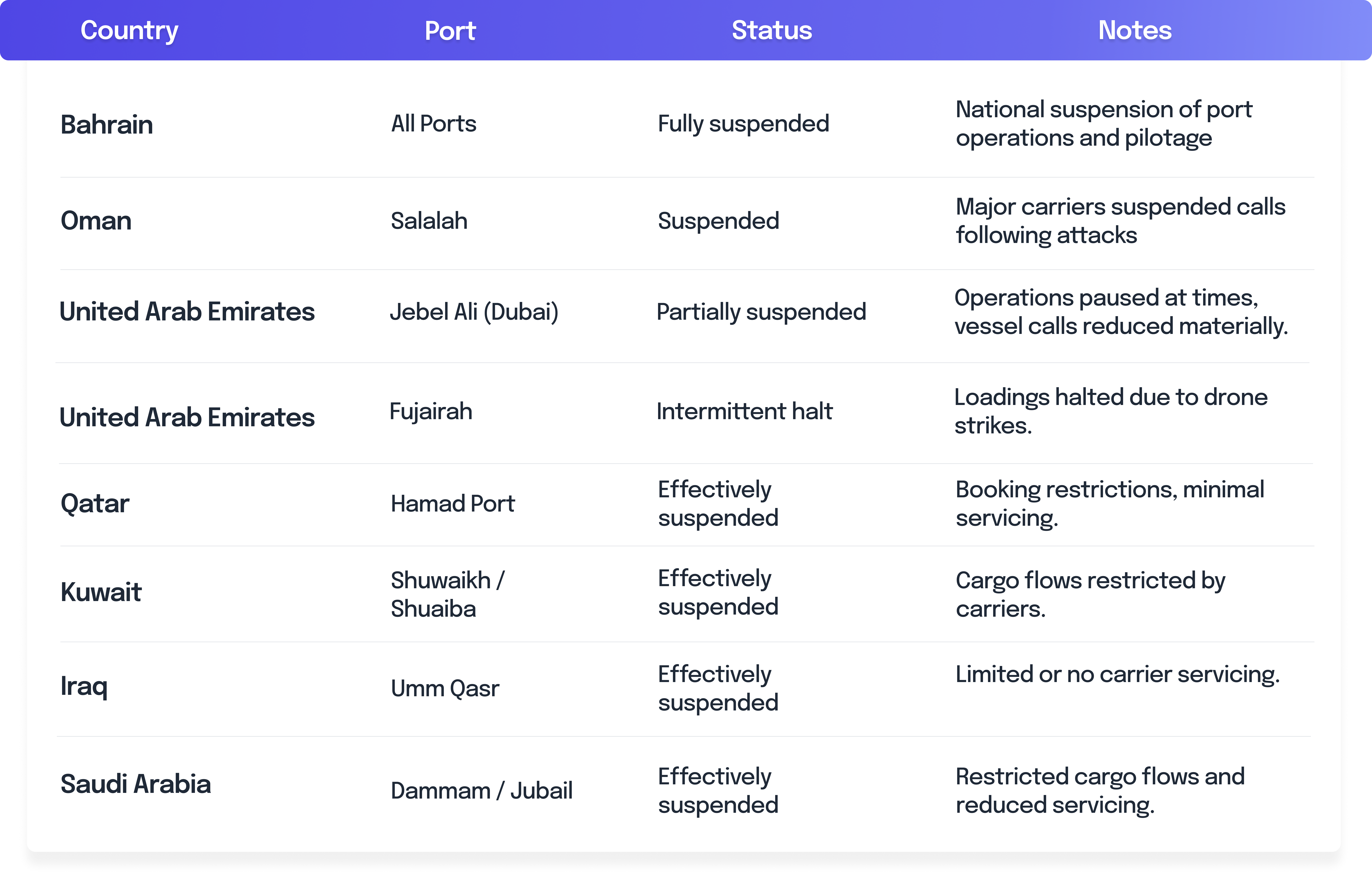
Ports with Operations Ceased or Effectively Suspended
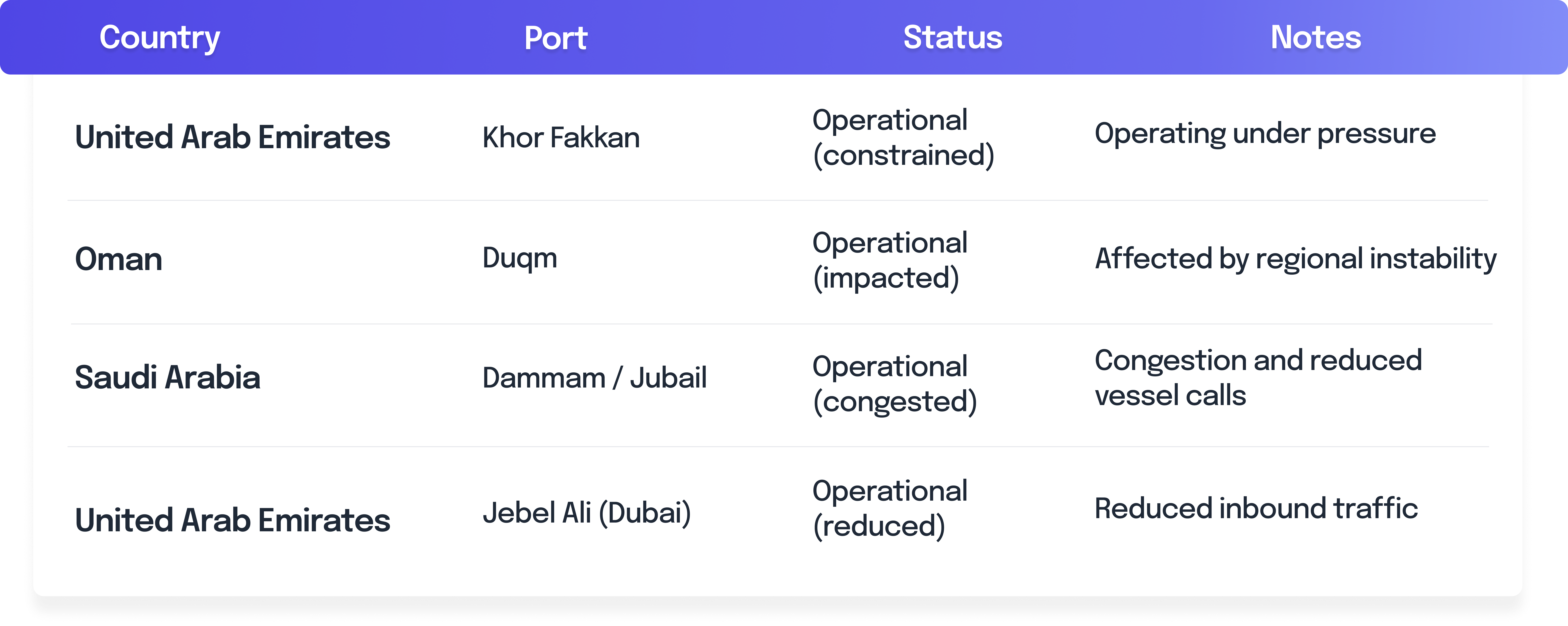
Ports Still Open but Heavily Impacted
Market Position
Conflict has disrupted a key global energy corridor, not a core container lane but critical to fuel supply.
Restrictions through the Strait of Hormuz are limiting tanker movements, tightening oil supply and driving price spikes.
Container shipping is impacted indirectly through fuel cost increases and network disruption, not physical blockage.
Key Impacts
Fuel/BAF
Oil price volatility is feeding directly into bunker costs.
Carriers are increasing BAF across all tradelanes with immediate effect.
Expect monthly resets with limited visibility, driven by oil market swings.
Carrier Networks
Carriers are avoiding high-risk Gulf areas and adjusting rotations.
Blank sailings increasing as networks are rebalanced.
Effective capacity tightening as vessels are delayed or redeployed.
Schedule Reliability
Rerouting and congestion are extending transit times.
Asian hubs such as Singapore and Port Klang seeing increased volume and pressure.
Flow-on delays impacting Australia-bound cargo, especially transhipment freight.
Costs
War risk insurance premiums rising materially.
Higher fuel and insurance costs being passed through by carriers.
Base freight rates expected to move up as cost pressure builds and capacity tightens.
🚢 Customer Guidance
Expect rising and variable BAF.
Lock rates where possible.
Allow buffer in transit times.
Monitor cargo readiness to reduce roll risk.
Shipping Line Surcharges
Carriers are applying EBS to recover sudden fuel cost increases that BAF does not cover.
Fuel prices spiked quickly due to Middle East disruption.
Voyages are longer due to rerouting via Cape of Good Hope.
BAF adjusts too slowly to reflect real costs.
Contracts lock base rates, so carriers cannot reprice freight.
Global Air Freight Update
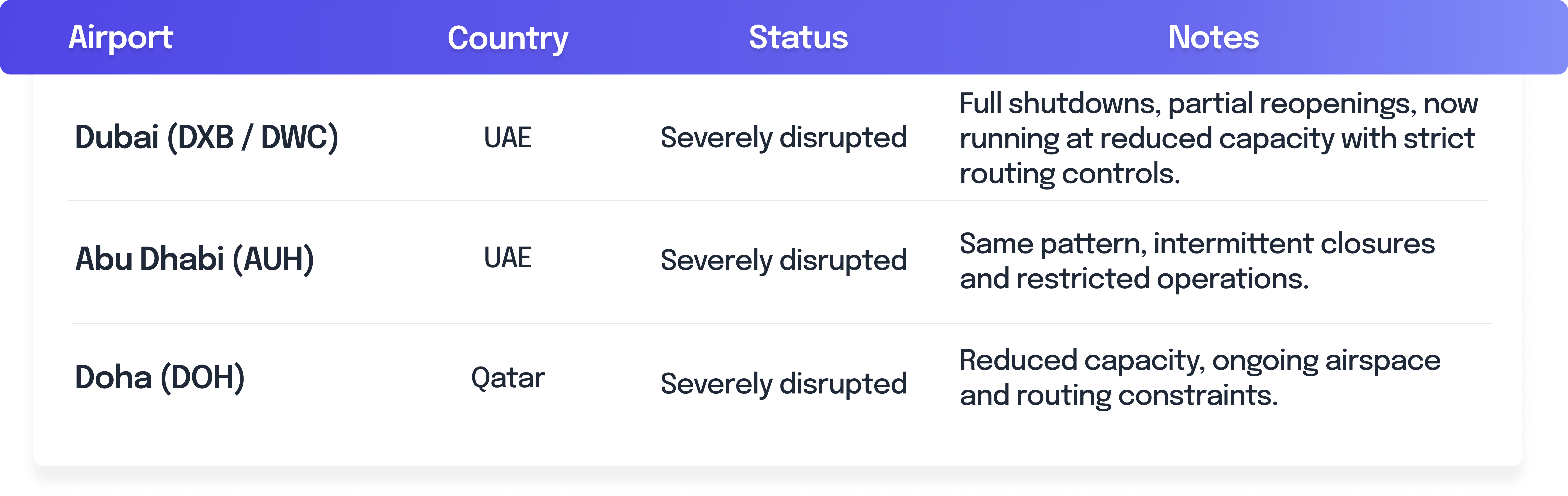
Airports & Airspace - Current Status
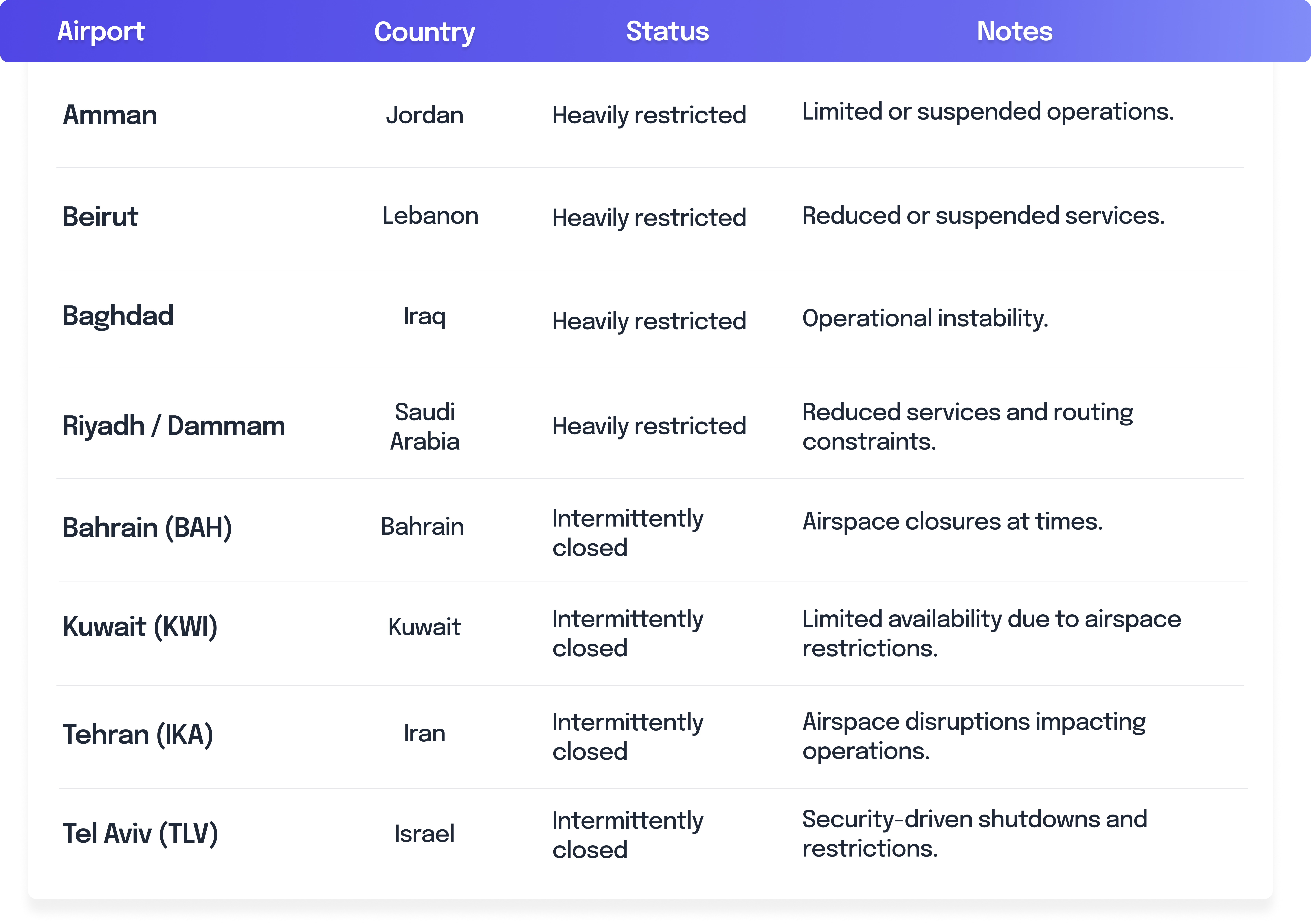
Other Affected Middle East Airports
Market Position
Middle East airspace disruption impacting a critical global transit corridor.
Gulf hubs play a central role in Europe–Asia–Australia cargo flows.
Air freight seeing immediate capacity and routing constraints.
Key Impacts
Capacity
Reduced uplift as key hubs operate at limited or inconsistent capacity.
Flight cancellations and frequency cuts across Gulf carriers.
Belly capacity constrained due to passenger network disruption.
Routing
Standard Europe–Middle East–Asia lanes disrupted.
Cargo being rerouted via Asia (Singapore, Hong Kong, Bangkok).
Longer flight paths increasing transit times and reducing efficiency.
Transit Times
Delays across Europe → Australia and Middle East-linked lanes.
Increased dwell times at alternative hubs.
Greater variability in delivery windows.
Rates
Spot rates rising across key tradelanes.
Premiums applied for secured space and priority cargo.
Volatility expected as capacity remains tight.
Fuel / Surcharges
Jet fuel prices rising in line with oil markets.
Fuel surcharges increasing across most airlines.
Additional operational costs being passed through.
✈️ Customer Guidance
Book early to secure uplift.
Expect longer and less predictable transit times.
Budget for higher rates and fuel surcharges.
Consider alternative routings via Asia where possible.
Australian Container Trucking - Fuel Surcharge Update
Fuel surcharges across the Australian transport market have increased materially in recent weeks, driven by the sharp rise in global oil and diesel prices.
Following the escalation in the Middle East, diesel costs have risen quickly, with the Australian Institute of Petroleum (AIP) reporting increases of close to 30% across major cities in early March. This has led to immediate adjustments in fuel levies by transport providers.
Current Position
Fuel surcharges are now typically sitting between 30% and 45%+ of base cartage rates
Some operators have already implemented increases to ~30%+ effective mid-March
Review cycles are shortening, with some carriers moving to weekly updates
🚚 What this means for your supply chain
Wharf cartage and final mile delivery costs have increased.
Fuel surcharges are being applied as a variable pass-through, separate to base transport rates.
Costs may continue to fluctuate in line with diesel price movements.
Actions
If you already ship with Explorate, your representative will already be monitoring shipments for potential disruption.
Book shipments as early as possible where flexibility exists.
For customers shipping more than 1,000 TEU annually, engage Explorate with your requirements for the upcoming year to secure coverage and pricing.
We will continue monitoring the situation and send further updates as they arise.
Be the first to know
No spam. Just the latest market news, tips, and interesting articles in your inbox.
Thank you! Your submission has been received!
Oops! Something went wrong while submitting the form.



.png)
.png)
